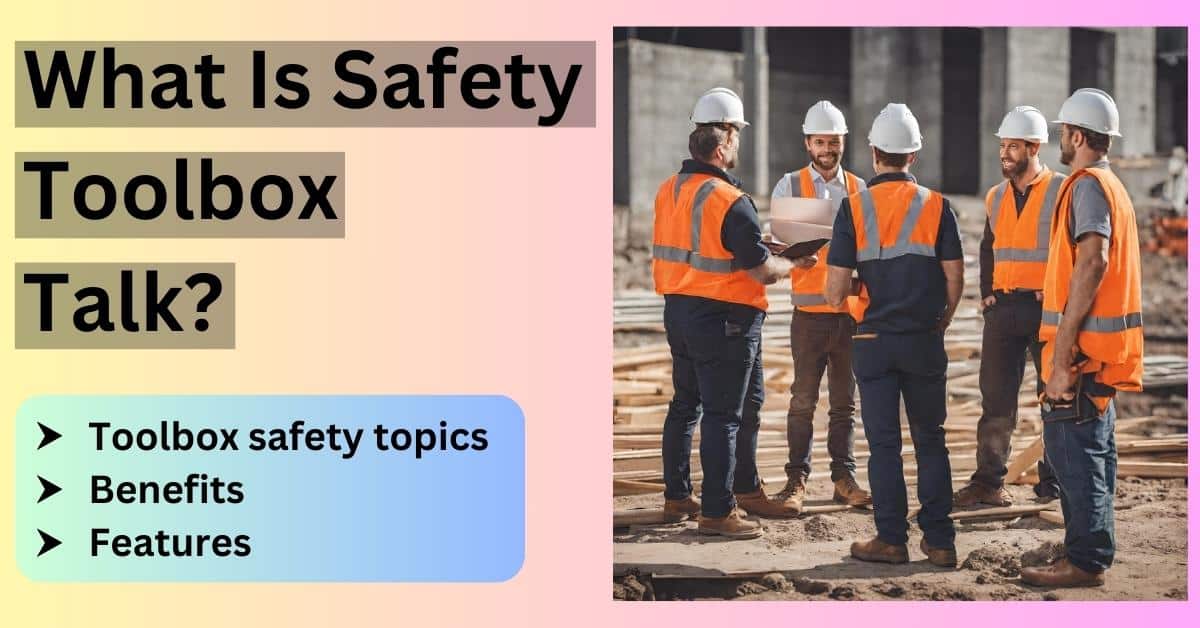
Workers arrive onsite early, gear in hand, coffee in cup. Before machinery fires up or ladders go up, a small group gathers near a trailer or trailer bay. A supervisor opens a folder or pulls up a note on a tablet. This isn’t roll call. It’s a toolbox talk—and it might be the most underrated safety lever on the job site.
Toolbox talks are short, focused safety discussions—typically 10 to 15 minutes—held at the worksite, usually before work begins. They’re not formal training sessions. They’re practical, conversational, and designed to address immediate risks, reinforce good habits, or respond to near misses. Done right, they shift safety from a policy on paper to a lived, shared practice.
Yet too many teams treat them as box-ticking rituals. Generic topics. Monotone delivery. No follow-up. That’s where they fail. The power of a toolbox talk isn’t in its frequency—it’s in its relevance, engagement, and consistency.
Let’s break down what makes them work, how to run them effectively, and where most teams go off track.
The Purpose Behind the Practice
Toolbox talks exist to keep safety visible, actionable, and human.
They’re not replacements for OSHA-mandated training, but they reinforce it. A forklift certification might cover mechanics and load limits, but a toolbox talk reminds the operator: Did you check the brakes this morning? What’s different about today’s load?
This micro-learning model works because it’s contextual. It meets people where they are—physically and mentally. Timing matters. A talk held at 7:05 a.m., before first task initiation, is more likely to influence behavior than one crammed into a Friday afternoon wrap-up.
Real-world example: A roofing crew in Denver held a daily talk about fall protection after a near miss—someone clipped off incorrectly on a steep pitch. The next day, a new hire asked, “Wait, do I anchor before or after stepping onto the edge?” That question likely prevented an incident. The talk didn’t just inform—it invited dialogue.
When to Hold a Toolbox Talk
There’s no single rule, but frequency and timing follow logic, not just compliance.
- Daily on high-risk sites (construction, utilities, oil and gas)
- Weekly for lower-risk environments (warehousing, facilities maintenance)
- After incidents or near misses—this is non-negotiable
- Before starting new tasks (e.g., confined space entry, hot work)
- When weather or site conditions change (e.g., ice, high winds)
The trigger shouldn’t be a calendar. It should be risk. If conditions shift, so should communication.
Common mistake: Holding talks only on Mondays. This turns them into a ritual, not a response. Workers learn to tune out. The message becomes, “It’s Monday, so here’s safety.”

Better approach: Use a rotating schedule with topic relevance. Monday might be PPE, but if heavy rain hits midweek, pivot to “Working in Wet Conditions” even if it wasn’t on the plan.
How to Run an Effective Toolbox Talk
Great talks follow a simple structure: Focus. Engage. Confirm.
1. Pick a Specific Topic Avoid broad themes like “Workplace Safety.” Instead, narrow it: - “Backing Up Safely: Spotter Hand Signals” - “Inspecting Extension Cords Before Use” - “Hydration in High Heat: Signs of Heat Stress”
Specificity increases retention and actionability.
2. Use Real Site Conditions Pull examples from yesterday’s work. Mention actual locations: “Last Thursday, we saw frayed wiring on the third-floor outlet. Let’s talk how to report and tag hazards like that.”
This grounds the talk in reality, not theory.
3. Encourage Participation Ask open questions:
- “What would you do if you saw a coworker bypass a guard?”
- “Has anyone had an issue with their respirator fit this week?”
Silence isn’t compliance—it might mean disengagement. Prompt responses. Rotate who leads.
4. Keep Records Without Over-Documenting A log is essential—OSHA and insurers often require it—but don’t let paperwork kill momentum.
Use a simple template: - Date - Topic - Facilitator - Attendees (names or signatures) - Key points discussed
Digital tools help, but a clipboard works fine.
5. Follow Up If you discuss ladder inspection, spot-check one later that day. Reinforce the behavior. If no follow-up happens, the message is: This talk didn’t matter.
Common Pitfalls and How to Avoid Them Even well-intentioned teams fall into traps.
❌ Talking at the team, not with them A monologue from the foreman reads as top-down. Workers disengage. Fix: Assign mini-topics. Rotate facilitators. Ask “What did you see?” instead of “Here’s what you need to know.”
❌ Repeating the same topics with no variation “Hard hat safety” every month becomes noise. Fix: Use a 52-week plan with seasonal and task-based topics. Refresh content annually.
❌ Ignoring near misses A dropped tool from height didn’t hit anyone? That’s not luck—it’s a warning. Fix: Make near misses automatic talk triggers.
❌ Skipping talks during rush periods “When we’re behind, we need safety more, not less.” High-pressure timelines increase risk. Never cancel talks to “save time.”
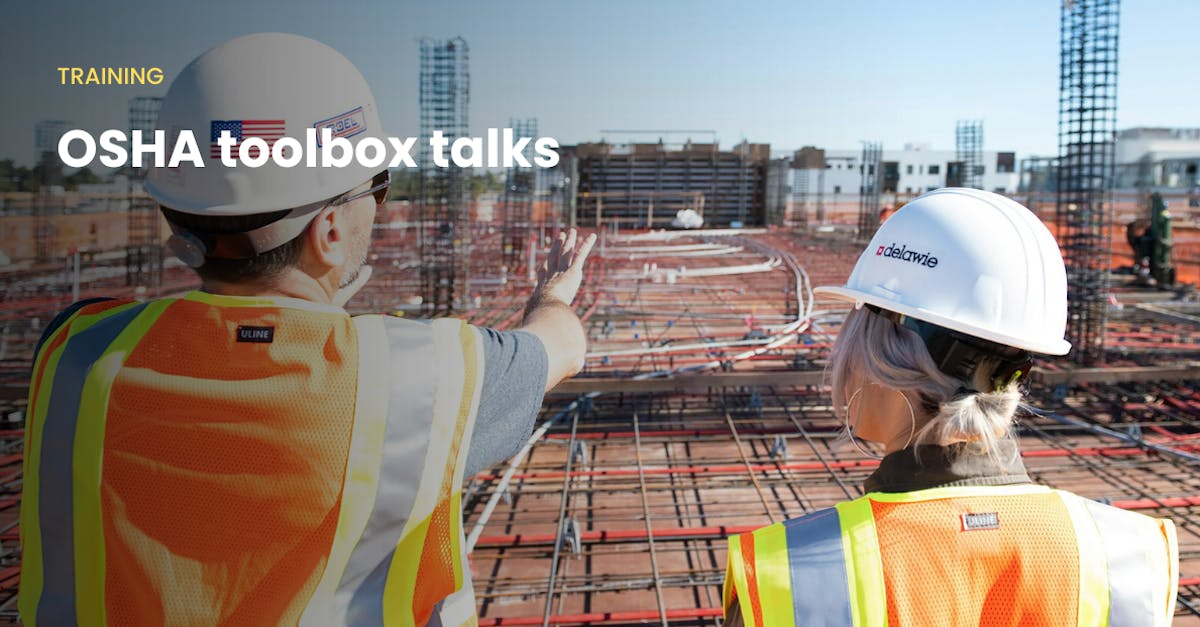
Toolbox Talk Topics: 52-Week Planning Guide
Use this sample annual spread to build a balanced, practical schedule.
| Month | Sample Topics |
|---|---|
| January | Cold stress, indoor air quality, equipment startup checks |
| February | Lockout/tagout review, ladder safety, fire extinguisher use |
| March | Spring prep, working at height, eye protection |
| April | Confined space awareness, hand tool inspection, PPE fit |
| May | Heat stress prep, electrical safety, contractor coordination |
| June | Sun exposure, hydration, emergency response drills |
| July | Hot work permits, fire prevention, crane signal review |
| August | Fatigue management, shift handoffs, noise exposure |
| September | Fall protection, scaffolding checks, material handling |
| October | Respiratory protection, housekeeping, night work safety |
| November | Winter prep, snow removal, vehicle safety |
| December | Holiday rush safety, fatigue, year-end hazard review |
Rotate facilitators monthly. Let experienced workers lead topics they know well.
Making Toolbox Talks More Engaging People remember stories, not statistics.
Instead of saying, “Slips cause 25% of injuries,” try: “Last month, a tile installer slipped on a wet patch near the elevator. He didn’t break anything, but he was out for two weeks. How could we have prevented that?”
Use props when possible: - Bring a damaged harness - Show a cracked hard hat - Demonstrate proper glove use with different materials
Visuals stick. So does interaction.
Pro tip: End with a “One Thing” challenge. “Today’s one thing: check your buddy’s lanyard attachment before they climb.” Simple. Actionable. Peer-driven.
Digital vs. Paper: Tools That Support Real Use
You don’t need tech to run a great talk. But if you have it, use it wisely.
Here are five practical tools teams use:
| Tool | Best For | Key Features |
|---|---|---|
| SafetyCulture (iAuditor) | Digital forms, photo logs, analytics | Custom checklists, offline use, real-time reports |
| SiteDocs | Construction teams with complex workflows | Automated reminders, integration with safety plans |
| Fragdeo | Video-based safety talks | Record talks, share with remote crews, track views |
| SmartServe Safety | Simple, low-cost option | Pre-built topics, sign-in sheets, exportable logs |
| Paper & Clipboard | Low-tech, reliable | Zero learning curve, always works, fully compliant |
No tool replaces facilitation skill. A great talk with paper beats a boring digital presentation.
Choose based on team size, site connectivity, and follow-up needs.
The Ripple Effect of Consistent Talks
Toolbox talks don’t just prevent accidents. They build culture.
When workers speak up during a talk, they’re more likely to speak up on the job. When supervisors listen, trust grows. When near misses are discussed, not punished, reporting increases.
One electrical contractor in Texas reduced recordables by 62% over two years—not by overhauling training, but by making talks mandatory, relevant, and participatory.
They didn’t add more meetings. They made the ones they had count.
Closing: Make Every Talk Matter
Toolbox talks work when they’re treated as essential, not administrative. They’re not about compliance—they’re about connection.
Run them with purpose. Tie them to real work. Let workers lead. Follow up. Rotate topics. Use near misses as fuel.
Don’t just hold a talk. Start a conversation.
Because the best safety culture isn’t built in manuals. It’s built in moments—early morning, on the job, when someone says, “Hey, did you check that?”
Be the one who starts the talk. Then listen.
Frequently Asked Questions
What is the ideal length for a toolbox talk? Aim for 10 to 15 minutes. Long enough to cover the topic, short enough to hold attention.
Who should lead a toolbox talk? Supervisors typically lead, but rotating among experienced team members increases engagement and ownership.
Do toolbox talks need to be documented? Yes. Maintain a log with date, topic, attendees, and key points for compliance and tracking.
Can toolbox talks replace formal safety training? No. They reinforce training but don’t substitute for certified programs like fall protection or confined space entry.
How often should topics repeat? Critical topics (e.g., fall protection, PPE) should reappear annually, but with updated examples or focus areas.
Should toolbox talks be held in bad weather? Yes—especially in bad weather. If conditions are hazardous, that’s exactly when the talk matters most.
Can you use videos during a toolbox talk? Yes, but keep them short (under 3 minutes) and follow up with discussion to ensure understanding.
FAQ
What should you look for in What Are Toolbox Talks and Why They Work? Focus on relevance, practical value, and how well the solution matches real user intent.
Is What Are Toolbox Talks and Why
They Work suitable for beginners? That depends on the workflow, but a clear step-by-step approach usually makes it easier to start.
How do you compare options around What Are Toolbox Talks and Why They Work? Compare features, trust signals, limitations, pricing, and ease of implementation.
What mistakes should you avoid? Avoid generic choices, weak validation, and decisions based only on marketing claims.
What is the next best step? Shortlist the most relevant options, validate them quickly, and refine from real-world results.



:max_bytes(150000):strip_icc()/GettyImages-21696356521-4fbe8ad077b44dd89725c2f789cb6716.jpg)
