For many in Southwestern Indiana, the dream of a stable career starts not with a four-year university, but with a practical, affordable degree from a trusted local institution. Ivy Tech Community College in Evansville offers exactly that—accessible, career-focused degrees that bridge the gap between education and employment. Whether you're a recent high school graduate, a working adult seeking advancement, or someone changing careers, Ivy Tech Evansville delivers programs aligned with regional job demand, flexible scheduling, and a clear path forward.
This isn’t about racking up student debt for degrees with uncertain returns. It’s about investing in credentials that lead directly to jobs—nursing, cybersecurity, manufacturing, business—and in many cases, laying the foundation for a bachelor’s degree without starting from scratch.
Why Choose Ivy Tech Evansville for Your Degree?
Ivy Tech Evansville stands out not just as a community college, but as a workforce engine for the region. With deep ties to local industries and employers, its curriculum is built around real-world needs, not theoretical ideals.
The college operates with a mission of accessibility. Tuition is a fraction of what you’d pay at a state university, and financial aid, scholarships, and workforce grants are widely available. Campus locations and online options provide flexibility for students balancing work, family, and education.
But affordability means nothing without outcomes. Ivy Tech Evansville boasts high job placement rates in fields like healthcare and advanced manufacturing. Its partnerships with companies such as Toyota, Deaconess Health System, and Berry Global ensure that what students learn in the classroom translates directly to the shop floor or hospital unit.
Associate Degrees That Lead to Jobs
Ivy Tech Evansville offers over 70 programs, but its strength lies in practical associate degrees with immediate labor market relevance. These aren’t generic surveys of a field—they’re targeted training pipelines.
Take the Associate of Science in Nursing (ASN). This two-year program prepares students to sit for the NCLEX-RN exam and enter the workforce as registered nurses. The curriculum includes clinical rotations at major Evansville hospitals, giving students hands-on experience before graduation. With Indiana facing a persistent nursing shortage, ASN grads often receive job offers before they complete their final semester.
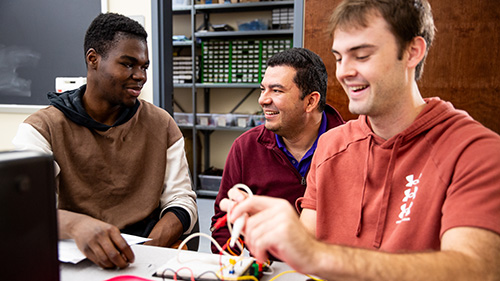
Another high-demand program is Electromechanical Engineering Technology. This degree trains students to maintain, troubleshoot, and improve complex automated systems—skills in constant demand at manufacturing plants across the Ohio River Valley. Students work with programmable logic controllers (PLCs), robotics, and industrial sensors, gaining proficiency with the exact equipment used by regional employers.
Cybersecurity is another fast-growing field served by Ivy Tech Evansville. The associate degree here includes courses in network defense, ethical hacking, and digital forensics. Graduates are prepared for entry-level roles like security analyst or IT support specialist, with many going on to work remotely for national firms or locally in healthcare and finance IT departments.
These programs share a common thread: they’re designed with employer input, include real-world labs or clinicals, and emphasize certifications that boost employability—like CompTIA Network+ in IT or Certified Production Technician (CPT) in manufacturing.
Transfer-Friendly Degrees for Future Bachelor’s Holders
Not every student at Ivy Tech Evansville plans to stop at an associate degree. Many use it as a strategic entry point into higher education, saving thousands before transferring to a four-year university.

The Associate of Science (AS) and Associate of Arts (AA) degrees are specifically structured for this purpose. These general education pathways ensure that credits transfer seamlessly to Indiana’s public universities, including the University of Southern Indiana (USI) and Indiana University.
For example, a student completing an AS in Biology at Ivy Tech Evansville can transfer to USI’s biology program with nearly all credits applied—meaning they start as a junior, having saved over $15,000 in tuition and fees.
Key to this success is Ivy Tech’s Transfer Agreements. These formal partnerships with over 30 colleges guarantee credit acceptance and often include reserved scholarship funding for transfer students. Advisors at the Evansville campus help students map out their transfer plans from day one, avoiding wasted courses and delays.
Workforce and Technical Certificates: Fast-Track Your Career
Sometimes a full degree isn’t necessary—or feasible. For career changers or those needing a quick credential, Ivy Tech Evansville offers dozens of short-term certificates that can be completed in months, not years.
These programs are particularly valuable in skilled trades and technical fields. Consider the Welding Technology Certificate. This eight-month program covers MIG, TIG, and stick welding, with classroom instruction and extensive shop time. Graduates often land jobs in local fabrication shops, construction, or industrial maintenance, with starting wages around $18–$22/hour.
Another example is the Medical Coding and Billing Certificate. With healthcare careers in demand but not always requiring direct patient care, this program trains students in ICD-10 coding, insurance claims processing, and electronic health records. Many complete the certificate part-time while working and transition into remote or hybrid roles within six months of graduation.
These certificates are funded through Indiana’s Workforce Ready Grant, which covers tuition for eligible adults in high-demand fields. That means many students earn these credentials at no out-of-pocket cost.
Realistic Challenges and How to Overcome Them
Ivy Tech Evansville isn’t a magic solution. Like any community college, it requires self-direction and persistence.
One common challenge is academic preparedness. Some students enter needing remedial math or English courses, which can delay progress toward their degree. The solution? Take the placement test seriously and use free tutoring services offered on campus. Ivy Tech’s academic coaches help students build study habits and time management skills critical for success.
Another issue is balancing school with life. Many students work full-time or care for families. While online and evening classes help, creating a realistic schedule is essential. Students who try to take 12 credit hours while working 40 hours often burn out. A better approach: start with 6–8 credits, prove consistency, then scale up.
Finally, some underestimate the importance of career services. Ivy Tech Evansville offers resume workshops, mock interviews, and job fairs—but only if students show up. Those who engage early with career advisors often land internships or job leads before graduation.
How to Get Started at Ivy Tech Evansville
Enrolling is straightforward, but doing it right makes a difference.
- Visit the Evansville campus—even if you plan to take online classes. Meeting with an academic advisor in person allows you to ask specific questions about program requirements, transfer pathways, or financial aid.
- Apply for admission and FAFSA. The application is free and takes under 30 minutes. Completing the FAFSA unlocks federal grants, loans, and work-study options.
- Take the placement test or submit ACT/SAT scores. This determines which courses you can take right away. If you’re rusty on math, use the free prep tools Ivy Tech provides.
- Attend new student orientation. This isn’t just a formality—it’s where you learn how to register for classes, access online systems, and connect with support resources.
- Enroll in your first term. Start with a mix of general education and core program courses. If you’re unsure, take a career exploration class—it’s only one credit and can clarify your direction.
Advisors recommend applying at least six weeks before the term starts, especially for competitive programs like nursing or radiologic technology, which have limited enrollment.
Degree Programs That Match Regional Job Demand
Ivy Tech Evansville doesn’t build programs in a vacuum. Its offerings reflect the economic reality of Southwestern Indiana.
Healthcare dominates the job market, and the college responds with strong programs in nursing, medical assisting, respiratory therapy, and pharmacy technology. Local hospitals and clinics actively recruit from these pipelines—Deaconess and Ascension St. Vincent together hire hundreds of Ivy Tech grads each year.
Manufacturing and logistics are equally important. With Evansville’s location on the Ohio River and proximity to major interstates, companies need skilled technicians. Programs in Industrial Maintenance, Supply Chain Management, and Aviation Maintenance prepare students for roles that pay $50,000+ with experience.
Business and IT are also well-represented. The Business Administration degree includes concentrations in management, marketing, and entrepreneurship. Students can launch ventures through Ivy Tech’s Innovation Hub, which offers mentorship and small grants.
In IT, the Information Technology—Systems Administration degree teaches server management, cloud platforms, and cybersecurity—skills directly transferable to roles at local government, schools, or private firms.
Each of these programs includes internships, capstone projects, or employer-sponsored training, ensuring students graduate not just with a diploma, but with experience.
A Smart First Step, Not a Last Resort
Ivy Tech Evansville degrees are often misunderstood as a fallback option. In reality, they’re a strategic choice—especially in a region where skilled labor is valued and debt burdens can derail careers before they begin.
For students aiming high, an associate degree here can be a launchpad. For those seeking immediate employment, it’s a direct route to stability. And for career changers, it’s a low-risk way to test new waters.
The key is intentionality. Choose a program with clear outcomes. Engage with advisors. Use support services. Treat it like the serious investment it is.
In a region where opportunity meets practicality, Ivy Tech Evansville isn’t just a college—it’s a career accelerator.
FAQ
What degrees does Ivy Tech Evansville offer? Ivy Tech Evansville offers associate degrees in fields like nursing, business, IT, engineering technology, and general studies, plus dozens of technical certificates.
Can I transfer my Ivy Tech credits to a four-year university? Yes. Ivy Tech has transfer agreements with Indiana public universities, ensuring that AA and AS degrees transfer seamlessly toward a bachelor’s.
How much does it cost to attend Ivy Tech Evansville? Tuition is approximately $150 per credit hour for in-district students. Many qualify for the Workforce Ready Grant, which covers tuition for high-demand programs.
Are classes available online? Yes. Ivy Tech Evansville offers hybrid and fully online options for many programs, including business, IT, and general education courses.
What are the most in-demand programs at Ivy Tech Evansville? Nursing, cybersecurity, electromechanical technology, welding, and medical coding are among the most in-demand due to strong job placement and regional employer needs.
Do I need to take a placement test? Yes, unless you have recent ACT/SAT scores. The test helps determine readiness for college-level math and English courses.
Is financial aid available? Yes. Students can apply for federal grants, loans, and scholarships. The FAFSA is required for most aid programs.
FAQ
What should you look for in Ivy Tech Evansville Degrees: Affordable Paths to In-Demand Careers? Focus on relevance, practical value, and how well the solution matches real user intent.
Is Ivy Tech Evansville Degrees: Affordable Paths to In-Demand Careers suitable for beginners? That depends on the workflow, but a clear step-by-step approach usually makes it easier to start.
How do you compare options around Ivy Tech Evansville Degrees: Affordable Paths to In-Demand Careers? Compare features, trust signals, limitations, pricing, and ease of implementation.
What mistakes should you avoid? Avoid generic choices, weak validation, and decisions based only on marketing claims.
What is the next best step? Shortlist the most relevant options, validate them quickly, and refine from real-world results.




:max_bytes(150000):strip_icc()/GettyImages-21696356521-4fbe8ad077b44dd89725c2f789cb6716.jpg)
